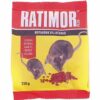

Ratimor Mouse and Rat Poison Grain Pellets 150g

1,59 €

Add to cart

Ratimor Mouse and Rat Poison Grain Pellets 150g

1,59 €

Effective mouse and rat poison in grain pellet form, attracting rodents and eliminating them within a few days.

Suitable for both indoor and outdoor use.

SKU: 3830072311158 Categories: , ,
Share your love
  • Ratimor Mouse and Rat Poison Grain Pellets 150g is an effective solution for controlling unwanted rodents such as mice and rats.
  • This poisoned bait contains specially processed grain pellets that are attractive to rodents but contain the lethal active ingredient bromadiolone.
  • Ratimor grain pellets are designed for both indoor and outdoor use and are particularly suitable for areas where rodents have access to abundant conventional food sources.
  • The poison takes effect within a few days of consumption, causing internal bleeding and death in rodents.

Ratimor PLUS Mouse and Rat Poison Grain Pellets are ready-to-use bait.

Anticoagulant rodenticides have a delayed effect, achieving efficacy within 4–10 days after bait consumption.

Instructions for Use

  • For mice indoors, use 10 g to 40 g of poisoned bait per bait station.
  • For rat infestations, use 10 g to 200 g of poisoned bait per bait station.
  • Place bait stations 10 m apart, reducing the distance to 5 meters in cases of high infestation.
  • Outdoors around buildings, use 10 g to 200 g of poisoned bait per bait station.
Weight 0,175 kg
Dimensions 5 × 5 × 2 cm

🚚

Estimated delivery time


Flag of Estonia
Estonia: 1-5 business days


Flag of Latvia
Latvia: 2-7 business days


Flag of Lithuania
Lithuania: 3-10 business days


Flag of Finland
Finland: 3-10 business days


ℹ️


We strive to display products in our online store as accurately as possible, but please note that product images are for illustrative purposes only and the actual packaging or appearance may vary slightly.


Additionally, the color of the fertilizer may vary between different batches – this is a completely normal part of the manufacturing process and does not in any way affect the high quality of the product, its nutrient content, or its effect on plants.