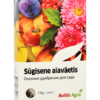


This 1 kg granular autumn garden fertilizer, packaged in a box, is specially developed to prepare home garden vegetation and lawn areas for the volatile winter months. This preparation is tailored to autumn nutritional needs, which means that the fertilizer is primarily based on phosphorus (P) and potassium (K), keeping the nitrogen content minimal or absent altogether. Limiting nitrogen prevents the formation of new, frost-sensitive growth at the end of the vegetation period.
The high potassium level in the fertilizer is vital – it promotes the lignification of summer shoots and thickens cell sap, which lowers the plant’s freezing point and provides strong protection against frost and winter fungal diseases. Meanwhile, phosphorus ensures the maintenance of a strong root system and actively supports the formation of next season’s flower and fruit buds. The universal formula is suitable for use on a wide variety of crops, from fruit trees and berry bushes to conifers, roses, and lawns, helping them wake up more vigorously in the spring and bear a more abundant harvest.
Instructions for use and cultivation: It is recommended to use autumn fertilizer between July and October. For dosing, note that 1 heaping tablespoon of granules weighs approximately 20 grams. Spread the granules evenly on the soil surface within the plant’s crown area.
-
Strawberries, raspberries, and blueberries: After harvest 40 g/m² (application rate 4 kg / 100 m²).
-
Perennial garden and bulb flowers, perennials: 30–50 g/m².
-
Ornamental trees, ornamental shrubs, and hedge plants: 50–70 g/m².
-
Conifers and rock garden plants: 40 g/m² (for larger trees 40–100 g per plant).
-
Roses, clematis, and rhododendrons: 50–60 g/m².
-
Currants and gooseberries: 40–50 g/m² (or 80–125 g per bush).
-
Fruit trees (apple, pear, plum, cherry): 80 g/m².
-
Autumn lawn fertilization (August–October): 20–50 g/m² (application rate 2–5 kg / 100 m²). Sow evenly on dry grass.
-
Establishing a lawn in autumn: 60–100 g/m² (application rate 6–10 kg / 100 m²).
(Note: The shade of the fertilizer granules may vary between batches; this does not affect the product’s agronomic value or effectiveness.)
Tips and recommendations:
-
Always fertilize the lawn when the leaves are dry, to avoid burning the grass, but water the area immediately after spreading the granules – moisture is necessary for the fertilizer to dissolve and reach the roots.
-
For berry crops (strawberries, raspberries), do not wait until late autumn to fertilize. Apply the fertilizer to the soil immediately after picking the last berries, so that the plants can recover and form new buds.
-
Finish autumn fertilization before the arrival of permanent frosts. Plant roots can no longer absorb nutrients from frozen soil.