

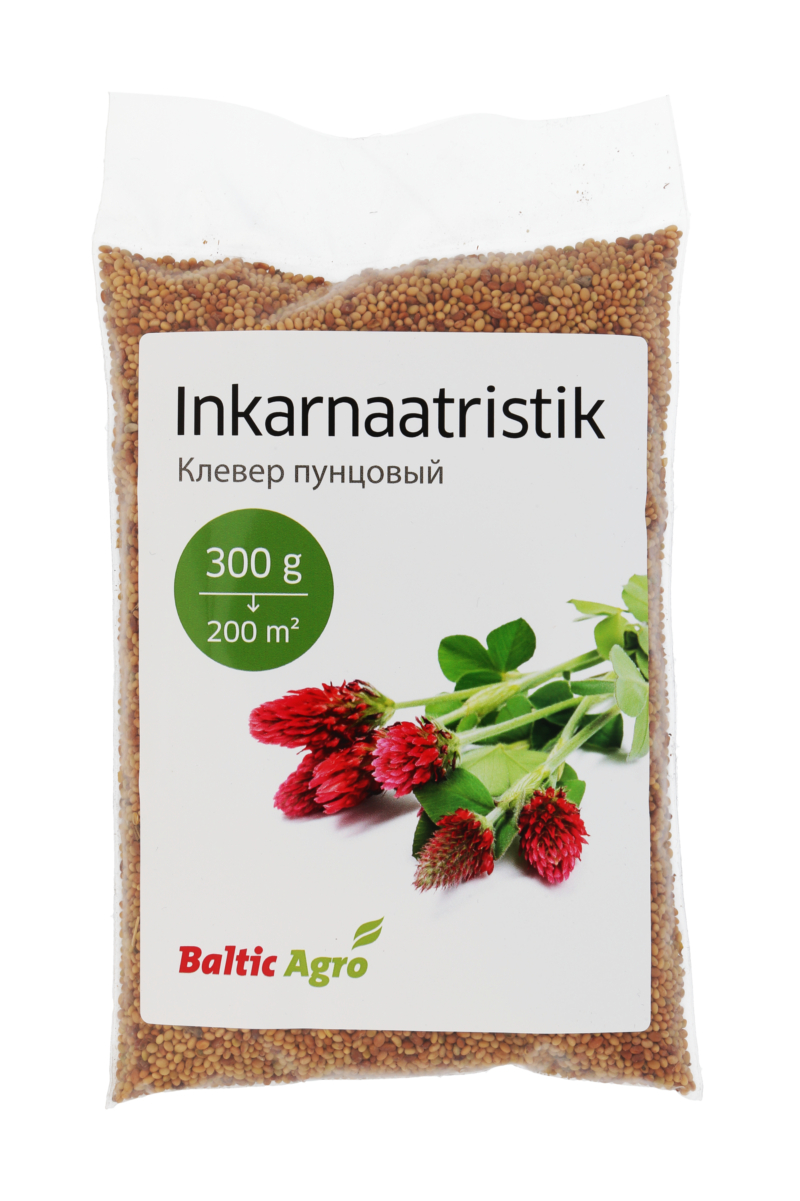
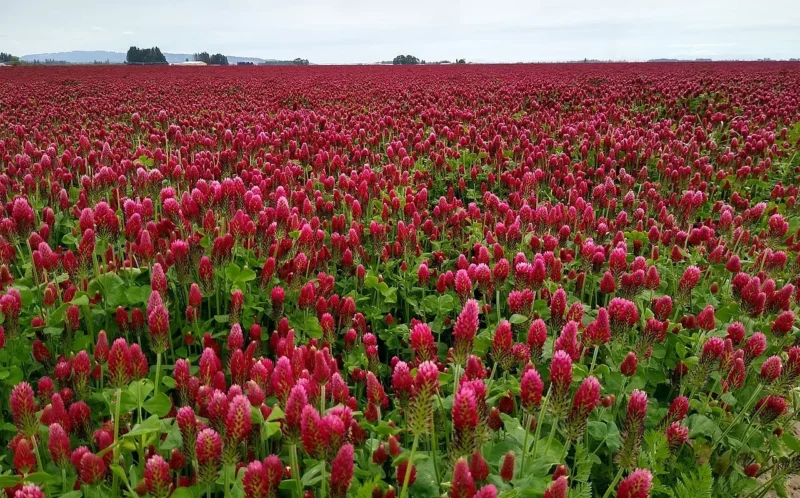
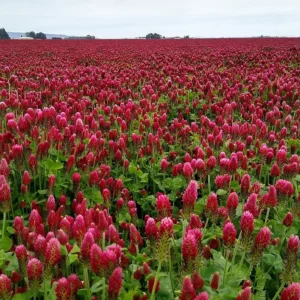

Crimson clover (Trifolium incarnatum) is a fast-growing annual plant prized for both its striking appearance and practical benefits. Unlike many other clover species, it stands out with its elongated, vivid crimson flower heads, reaching a height of 40–100 cm depending on growing conditions. This makes it an excellent choice for flower meadows or simply for adding diversity to any garden.
Beyond its visual appeal, crimson clover is an indispensable aid for improving soil health. As a legume, it fixes atmospheric nitrogen through nodule bacteria residing on its roots, naturally enriching the soil. Grown as a cover crop, it effectively suppresses weeds, reduces soil-borne pathogens, and enhances overall soil structure and fertility. It is also an exceptional honey plant that attracts an abundance of pollinators to the garden, including bees and butterflies.
Usage and Growing Instructions:
-
Sowing time and purpose: If you wish to enjoy its blooming beauty and grow it for pollinators (as a honey plant), sow in the spring, preferably in May. If using it as a cover crop to improve the soil after harvesting the main crop, sow the seeds in August or September (with late sowing, the plant will not reach flowering before winter).
-
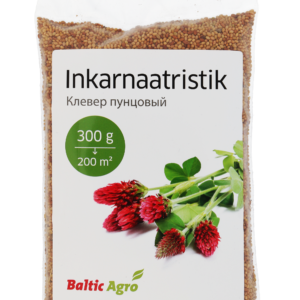
Seeding rate: This 300 g pack is sufficient to cover an area of approximately 200 m².
-
Sowing: Sow seeds evenly onto prepared, weed-free soil and lightly rake them in.
Tips and recommendations:
-
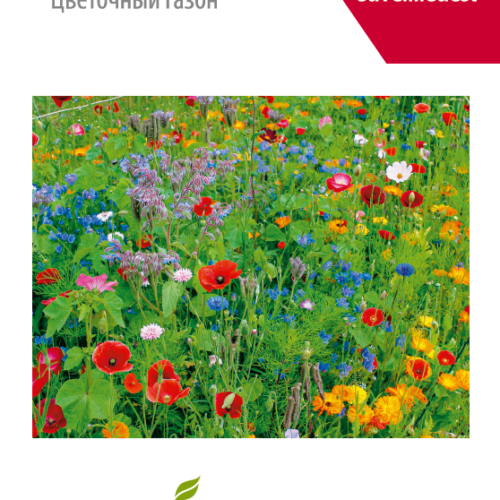
Mix crimson clover seeds with other annual meadow wildflowers to create a diverse, eye-catching wild flower patch in your garden.
-
If growing clover purely as green manure (to enrich the soil), dig the green biomass into the ground in autumn before stems turn woody, or in early spring—this ensures the organic matter decomposes faster and releases nitrogen for subsequent crops.